
Last Updated on February 17, 2026 by Rajeev Bagra
A thoughtful look at one of the most common arguments used to downplay artificial intelligence.
Introduction
One of the most frequent remarks about artificial intelligence is:
“AI doesn’t create anything new. It only uses existing knowledge.”
You’ll often hear this from people who are skeptical about AI’s impact on creativity, science, and innovation.
But is this really true?
In this article, we’ll explore what “new knowledge” actually means, how humans create ideas, what AI can and cannot do, and why this argument is both partly correct and deeply misleading.
What Does “Creating New Knowledge” Mean?
Before judging AI, we need to define what “new knowledge” is.
In practice, new knowledge can mean:
- A new scientific discovery
- A new mathematical proof
- A new strategy or method
- A new design, idea, or framework
- A new way of solving an old problem
Most of these do not appear from nowhere. They are built on existing information.
That’s true for humans — and it’s true for AI.
Humans Also Build on Existing Knowledge
Every human thinker relies on:
- Language learned from others
- Books and education
- Cultural exposure
- Previous discoveries
Einstein built on Newton.
Newton built on Galileo.
Modern programmers build on decades of prior research.
Human creativity is not “creation from nothing.”
It is:
Learning → Combining → Extending → Improving
AI follows a similar pattern — but computationally.
Example 1: AlphaFold and Protein Discovery


One of the strongest examples of AI creating useful new knowledge is AlphaFold, developed by DeepMind.
For decades, scientists struggled to predict how proteins fold into 3D shapes. This problem is central to biology and medicine.
AlphaFold:
- Predicted thousands of protein structures
- Solved problems humans hadn’t solved
- Was later confirmed by experiments
- Accelerated drug and disease research
These structures were not copied from textbooks.
They were computed and inferred from learned patterns.
This is scientific discovery.
Example 2: AlphaGo and Strategic Innovation


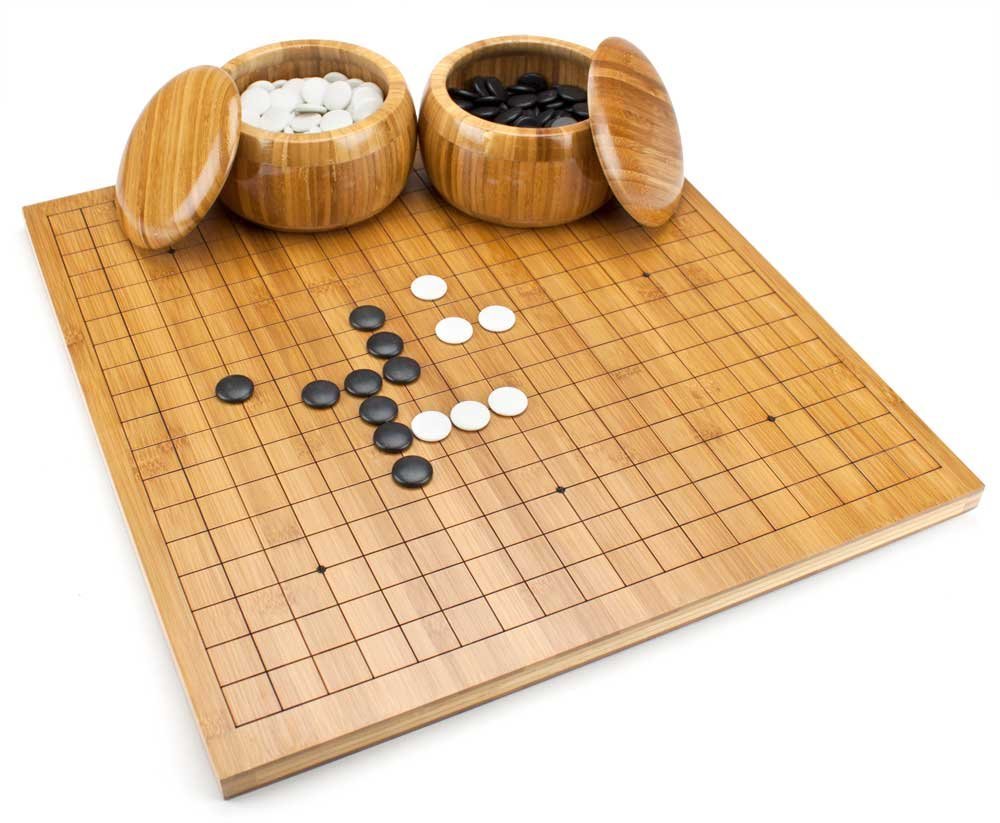
In 2016, AlphaGo played a historic match against Lee Sedol.
During the game, AlphaGo made a move (Move 37) that shocked professional players.
At first, experts thought:
“That’s a mistake.”
Later they realized:
“That’s brilliant.”
The move was:
- Uncommon
- Not in human playbooks
- Strategically superior
- Later adopted by professionals
This was strategic innovation — created by an AI system.
How AI Actually Generates “New” Ideas
AI does not memorize and copy like a database.
Modern AI systems learn:
- Patterns
- Relationships
- Structures
- Probabilities
Then they use these to:
- Generalize
- Extrapolate
- Optimize
- Combine concepts in new ways
This allows AI to operate in spaces humans have not fully explored.
In practice, AI can:
- Design new molecules
- Propose new materials
- Generate new algorithms
- Create original content
- Find patterns humans missed
All using learned knowledge.
Where Critics Are Right
To be fair, AI has real limitations.
AI does NOT:
- Have consciousness
- Have emotions or intention
- Have personal curiosity
- Perform physical experiments alone
- Understand meaning like humans
It works inside mathematical and statistical boundaries.
So critics are correct that:
AI does not “think” like a human.
But that does not mean it produces nothing new.
Is Recombination the Same as Creativity?
This debate is philosophical.
There are two main views:
View 1: AI Only Recombines
- Creativity requires intention
- AI only mixes patterns
- Therefore AI is not creative
View 2: Recombination Is Creativity
- Humans also recombine ideas
- Most inventions are extensions
- Creativity = structured recombination
Modern cognitive science largely supports View 2.
Even evolution creates new designs without intention.
Why This Argument Is So Popular
The “AI creates nothing” argument persists because:
1. Psychological Reasons
People feel threatened.
AI challenges professional identity.
2. Emotional Reasons
Machines feel “cold” and mechanical.
3. Philosophical Reasons
People associate creativity with consciousness.
4. Economic Reasons
AI disrupts industries and jobs.
Downplaying AI feels safer.
The Most Accurate Statement
The strongest honest position is this:
AI does not create knowledge the way conscious humans do, but it can generate novel, useful, and sometimes scientifically valid discoveries by learning from existing data.
This is very different from saying:
“AI creates nothing new.”
What This Means for the Future
As AI improves, it will increasingly:
- Assist researchers
- Accelerate science
- Improve decision-making
- Enhance creativity
- Expand human capabilities
AI is not replacing human intelligence.
It is amplifying it.
The future is hybrid:
Human + Machine.
Final Conclusion
So, does AI only reuse existing knowledge?
❌ No — that is an oversimplification.
The truth is:
- AI has no awareness
- AI has no emotions
- AI has no intention
But:
- AI can generate new structures
- AI can find unseen patterns
- AI can discover useful solutions
- AI can reshape entire fields
Just like humans, AI builds on the past.
But sometimes, what it builds is genuinely new.
Key Takeaway
AI does not “think” like humans —
but it can still create knowledge that humans did not have before.
And that makes it one of the most powerful tools ever created.
Discover more from Aiannum.com
Subscribe to get the latest posts sent to your email.
Leave a Reply