
Last Updated on February 26, 2026 by Rajeev Bagra

In the world of Python programming, few libraries are as foundational as NumPy.
While many developers associate it primarily with artificial intelligence, NumPy is far broader in scope. It powers data science, scientific research, financial modeling, computer vision, and even large-scale AI systems.
This article presents a structured roadmap to mastering NumPy — covering prerequisites, learning stages, real-world use cases, major ecosystems built on top of it, and recommended resources.
Why NumPy Matters
NumPy is not a front-facing “product tool.”
It is infrastructure.
Most modern Python-based computational systems rely on fast, optimized array operations. NumPy provides:
- High-performance multidimensional arrays
- Vectorized computation (no loops required)
- Linear algebra operations
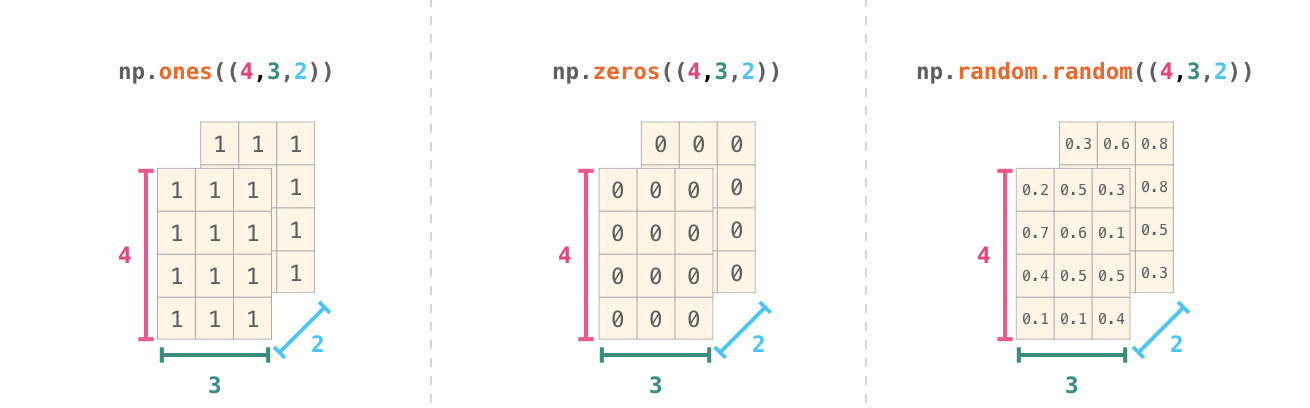
- Random number generation
- Mathematical utilities
Without NumPy, Python would be too slow for large-scale numerical workloads.
Stage 0: Prerequisites Before Learning NumPy
1️⃣ Python Fundamentals
Before touching NumPy, learners should be comfortable with:
- Variables and data types
- Lists and tuples
- Loops
- Functions
- List comprehensions
- Basic object-oriented programming
Recommended resource:
https://docs.python.org/3/tutorial/
2️⃣ Basic Mathematics
Advanced math is not required at the beginning, but foundational clarity helps:
- Algebra basics
- Mean and variance
- Understanding rows and columns
- Concept of vectors and matrices
Optional but helpful:
Linear algebra basics (dot product, matrix multiplication)
Khan Academy Linear Algebra:
https://www.khanacademy.org/math/linear-algebra
Stage 1: NumPy Foundations (Core Skills)
At this level, learners understand what arrays are and why they outperform Python lists.
Essential Topics
Creating Arrays
np.array()
np.zeros()
np.ones()
np.arange()
np.linspace()
Understanding Array Properties
- shape
- ndim
- dtype
- size
Indexing and Slicing
- 1D arrays
- 2D arrays
- Boolean masking
Vectorized Operations
This is the most important concept in NumPy.
Instead of loops:
for i in range(len(a)):
    a[i] = a[i] * 2
NumPy allows:
a = a * 2This is dramatically faster and more memory efficient.
Official beginner guide:
https://numpy.org/devdocs/user/absolute_beginners.html
Stage 2: Intermediate NumPy (Where Power Emerges)
At this stage, learners move beyond basic array manipulation.
1️⃣ Broadcasting
Broadcasting allows operations between arrays of different shapes — a powerful and unique feature of NumPy.
2️⃣ Linear Algebra
np.dot()
np.matmul()
np.linalg.inv()
np.linalg.eig()
These functions power:
- Machine learning algorithms
- Optimization systems
- Neural networks
- Financial models
3️⃣ Random Number Generation
np.random.rand()
np.random.randn()
np.random.randint()
Used in:
- Simulations
- AI training
- Monte Carlo modeling
- Statistical testing
Stage 3: Advanced NumPy (AI-Level Mastery)
This level focuses on mathematical depth and computational efficiency.
Key topics include:
- Eigenvalues & eigenvectors
- Singular Value Decomposition (SVD)
- Matrix factorization
- Tensor-like operations
- Memory optimization
- Performance benchmarking
This is the stage where developers can implement:
- Gradient descent from scratch
- Linear regression manually
- Basic neural networks using only NumPy
Real-World Use Cases of NumPy
1️⃣ Machine Learning & AI
Major ML libraries built on top of NumPy include:
- scikit-learn
- TensorFlow
- PyTorch
Even advanced deep learning systems rely on NumPy-style array logic.
2️⃣ Scientific Computing
Used heavily in:
- SciPy
Applications include:
- Physics simulations
- Astronomy modeling
- Engineering computations
3️⃣ Data Analysis
Even pandas is built on top of NumPy arrays.
Pandas handles structured data, but NumPy performs the underlying numerical operations.
4️⃣ Finance & Quantitative Modeling
NumPy powers:
- Portfolio optimization
- Risk modeling
- Algorithmic trading systems
- Monte Carlo simulations
Quantitative finance professionals depend heavily on matrix operations.
5️⃣ Computer Vision
Images are essentially multi-dimensional arrays.
Libraries such as:
- OpenCV
use NumPy arrays to process and manipulate images.
Suggested 8-Week Learning Plan
Week 1–2
Python + math refresh
Week 3
Arrays, indexing, vectorization
Week 4
Broadcasting and performance
Week 5
Linear algebra + random module
Week 6
Build linear regression from scratch
Week 7
Combine NumPy with Pandas for analytics
Week 8
Build a simple neural network using only NumPy
Practical Projects to Build Mastery
- Stock price simulation
- Portfolio risk calculator
- Monte Carlo simulation engine
- Linear regression without sklearn
- K-means clustering from scratch
- Image filters using array manipulation
These projects transform theory into skill.
Is NumPy Only for AI Developers?
No.
NumPy is for:
- AI engineers
- Data scientists
- Quantitative analysts
- Researchers
- Financial modelers
- Backend ML developers
- Scientific programmers
It is not a niche tool. It is foundational infrastructure.
If Pandas helps analyze business data,
NumPy builds the computational engine.
Final Thoughts
NumPy is not optional for serious Python developers working in data or AI.
It teaches:
- How computers handle numerical data
- How machine learning algorithms compute
- How high-performance scientific systems scale
Mastering NumPy builds mathematical intuition, computational efficiency, and deeper understanding of how modern AI systems operate.
For anyone aiming at AI, data science, quantitative finance, or scientific computing, NumPy is not just useful — it is essential.
Discover more from Aiannum.com
Subscribe to get the latest posts sent to your email.
Leave a Reply